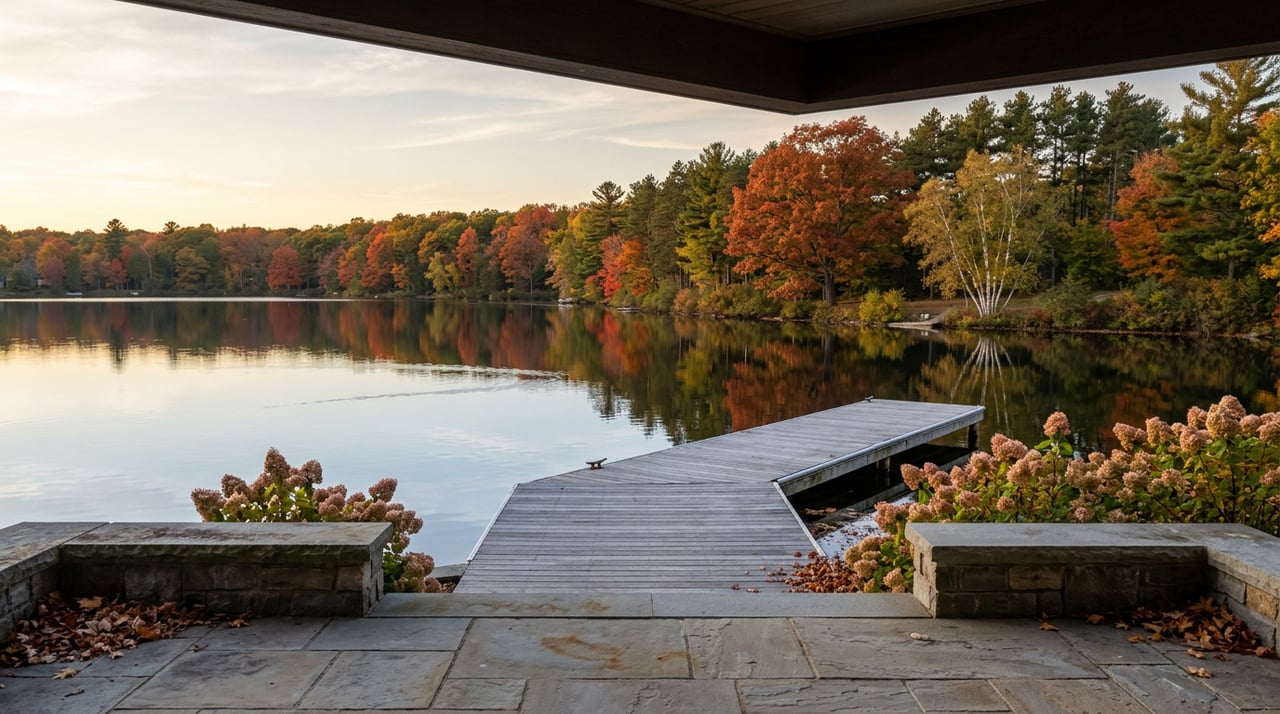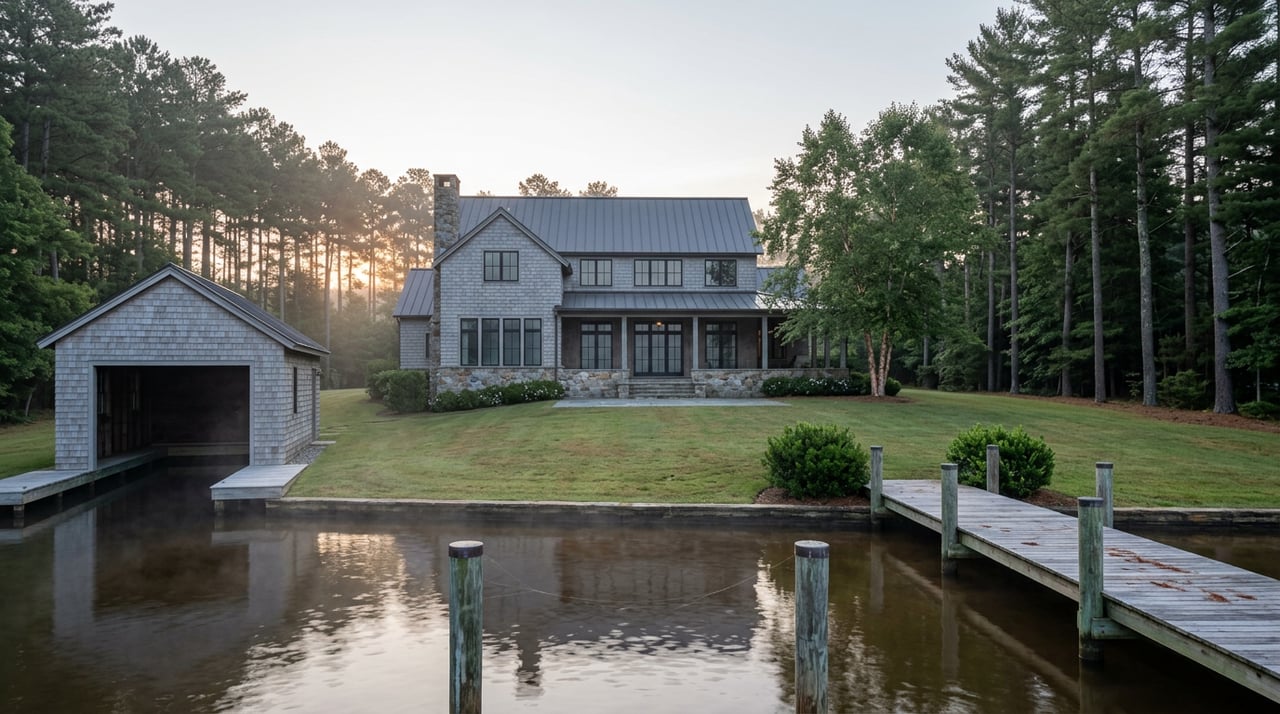
A buyer looking at a "water access" listing near Winnipesaukee this summer asked a simple question before writing an offer: can I keep my boat here. The answer, according to New Hampshire's own Marine Patrol, was more complicated than the listing sheet suggested. Moorings on the lake are not granted for deeded beach rights or rights of way. They go to the owner of shorefront property, or to an association that owns it. A buyer holding a deeded right to walk to a beach was not automatically holding the right to tie up a boat there.
That distinction is the whole story. Everyone comparing waterfront to water access on Winnipesaukee assumes the gap between the two is about the view, or the extra hundred feet of lawn running down to the shoreline. It isn't, or not primarily. The gap is regulatory. New Hampshire controls who gets to put a boat on this lake with the same specificity it controls who gets to build a dock, and both systems were built to freeze supply, not expand it.
The State Owns the Water, Not You
New Hampshire's mooring law, RSA 270:61, covers Winnipesaukee along with Squam, Newfound, Winnisquam, Sunapee, Ossipee, Bow Lake, and Pleasant Lake in Deerfield and Northwood. The statute caps most shorefront parcels at one mooring permit each, regardless of how many owners share legal access to that property. A permit holder cannot sell or lease the mooring outside narrow rules, and the state can remove any mooring that shows up without a current decal, without a hearing first.
The Marine Patrol's own guidance is direct on who qualifies:
"A property owner, or a group or association which owns shorefront property."
Deeded beach rights and rights of way are named exceptions. They do not qualify. That single line explains a lot about why "water access" communities on Winnipesaukee structure their boating amenities the way they do. If an individual homeowner in one of these communities wanted their own private mooring, the mooring law would likely stop them cold. The workaround these communities actually use is collective ownership: the association itself holds shorefront property and applies for slips or moorings on behalf of everyone, which is a different legal arrangement than an individual deeded right.
The Second Bottleneck: New Docks Are Mostly Frozen Too
Layer the Shoreland Water Quality Protection Act on top of the mooring law and the picture sharpens further. RSA 483-B creates a protected shoreland extending 250 feet landward from the reference line of any lake or pond over ten acres, and Winnipesaukee falls squarely inside it. Within that zone, New Hampshire's Department of Environmental Services requires a wetlands permit for new docking structures, including seasonal docks, permanent docks, and boat or jet-ski lifts. Repairs and modifications to existing structures can trigger their own review.
In practice, permanent docks on Winnipesaukee are largely a grandfathered category. New approvals run overwhelmingly toward seasonal installations, the kind that come out of the water each fall. A buyer looking at a parcel with an existing permanent dock is often looking at a structure that could not be built new today under the same footprint or classification. That is a meaningfully different asset than a house with lake frontage and no dock at all, and it is why sellers with a legally documented, grandfathered permanent dock treat that documentation as part of the sale, not an afterthought.
What This Does to Price
Run the numbers from the first half of 2026 through this lens and the spread stops looking like ordinary luxury pricing and starts looking like scarcity pricing.
Across the 25 towns that make up the Lakes Region, 539 single-family homes sold between January 1 and June 29, 2026, for a combined total north of $436 million. The median sale price came in at $535,000, up 10.3 percent from the same stretch in 2025. That is the baseline: a healthy, appreciating regional market, but not an exotic one.
Winnipesaukee waterfront runs in a different currency. Twenty-nine waterfront single-family homes closed in that same first half of 2026, totaling $92.6 million in volume, a 43 percent jump from 2025. The median price on those closings was $2.3 million. The highest sale of the year so far, $12.3 million for a property on Black Cat Island in Meredith, sat at the top of that range. Waterfront properties overall are commanding a premium of 40 percent or more over comparable non-waterfront homes in the same towns, and active waterfront inventory on the lake was running around 46 listings with a median asking price near $2.5 million as the summer progressed.
A 40 percent premium for lake frontage would be unremarkable in most resort markets. A four-to-five-times multiple over the regional median, sustained through a year when overall inventory was loosening, is not explained by frontage alone. It is explained by a dock and mooring system that cannot expand no matter how much demand shows up, sitting inside towns where the regional housing supply is otherwise responding normally to buyer interest.
Same Towns, Two Different Products
Alton, Gilford, Laconia, Meredith, Moultonborough, Center Harbor, Tuftonboro, and Wolfeboro all ring the lake, and every one of them contains both true waterfront and water access product side by side. The difference shows up clearly once you know what to look for.
In Meredith, Waldron Bay sits on Lake Winnisquam rather than Winnipesaukee itself, but it is a useful model for how these communities are built. Sixty-one individual homesites share 3,482 feet of association-owned shorefront, a private sandy beach, and 21 seasonal boat slips that belong to the community rather than to any single deed. A homeowner there has boat access through the association's own shorefront ownership, which is exactly the structure the mooring law rewards. An individual buyer trying to arrange the same access on their own, without that collective ownership, would run into the same one-mooring-per-parcel ceiling that limits everyone else.
In Laconia, South Down Shores and Long Bay together stretch across more than 360 acres with nearly a mile of shorefront on Paugus Bay. These gated communities bundle beach access, docks, and berths into the association's amenities, and recent sales inside them have landed in the $450,000 to $1.2 million range, a fraction of the true waterfront median on the main lake. The homes are close, the amenities are real, and the price is a different order of magnitude than a deeded parcel with its own frontage and its own mooring rights.
Neither community is a lesser version of waterfront. They are a different legal product entirely, built around the reality that individual mooring rights are hard to come by and shared shorefront ownership is the practical way around that ceiling.
Before You Write the Offer
A few questions are worth answering before any offer goes in on a property marketed as water access, deeded beach rights, or "near the lake":
- Ask for the recorded easement or HOA documents and read exactly what they grant. Beach access and boat slip access are not the same right, and listing language sometimes blurs them.
- If a mooring or slip is part of the pitch, request the permit number and confirm directly with the Marine Patrol's mooring program or the local harbormaster that it transfers with the sale rather than resetting with a new owner.
- If a dock is already in place, find out whether it is classified as a grandfathered permanent structure or a seasonal installation, since that classification determines what can and cannot be rebuilt later.
- Check whether the mooring or slip belongs to the individual parcel or to the association that owns the shorefront, since that distinction is often the entire reason the access exists at all.
Frequently Asked Questions
Does every "water access" listing on Winnipesaukee include a boat slip or mooring? Not automatically. Deeded beach rights and rights of way are specifically excluded from mooring eligibility under state rules, so access to a beach does not guarantee access to keep a boat there unless the community itself holds shorefront ownership and manages slips collectively.
Can a buyer build a new permanent dock on undeveloped Winnipesaukee waterfront? New docking structures require a wetlands permit under state shoreland law, and approvals in practice run mostly toward seasonal docks. Permanent docks on the lake today are largely grandfathered structures rather than new construction.
How wide is the actual price gap between true waterfront and water access in the same town? Wide enough to be structural rather than cosmetic. Regional single-family homes were selling at a $535,000 median in the first half of 2026, while Winnipesaukee waterfront closed at a $2.3 million median in that same window, a gap that tracks the scarcity of legal boat access more than it tracks square footage or finish quality.
Understanding what a deed actually conveys on this lake takes more than reading a listing sheet, and it is exactly the kind of detail that changes which property makes sense for a given buyer. If you are weighing waterfront against water access anywhere in the Lakes Region, the Julie Tsakirgis Group can walk through the permit history, easement language, and town-by-town differences before you write an offer.